For many South African businesses, diesel is one of the largest running costs, and a lot of it sits in a tank or bowser on your own property before it reaches a machine. Keeping that stock under control is what bulk diesel storage management is about, and it is the foundation of any serious fuel-management system such as those from SmartFuel. This guide covers how to manage fixed tanks and bowsers, how to record and reconcile fuel, and what to ask before choosing a monitoring or dispensing solution.

What Is Bulk Diesel Storage Management?
Bulk diesel storage management is the set of processes, records and equipment a business uses to know how much diesel it holds onsite, how it arrived, where it went and who authorised it.
It has two parts. The first is the physical installation: the tank, bowser, pump and hose. The second is the information around it: delivery records, dispensing records, stock readings and the reconciliation that ties them together. A well-maintained tank with poor records is still hard to manage, and good records cannot fully compensate for equipment that is not suited to the site.
There is a difference between knowing roughly how full a tank is and keeping a reliable record of fuel movements. A level reading tells you where you are today. A movement record tells you how you got there, which is what you need when numbers do not add up.
Manual checks are not automatically inaccurate, and technology does not replace sound procedures. Good systems make good procedures easier to follow consistently.
Why Onsite Diesel Tanks and Bowsers Need Clear Controls
Poor bulk diesel storage management shows up in different ways, and not every site has every problem below, but these are the risks that come up most often across farms, mines, depots and construction sites:
- Limited visibility of how much diesel remains, especially at remote locations.
- Differences between fuel delivered, stored, dispensed and recorded.
- Unclear responsibility for who holds the keys, who may dispense and who completes the records.
- Handwritten registers that are incomplete or hard to reconcile.
- Several tanks or bowsers recorded in different ways.
- Management decisions based on figures nobody fully trusts.
None of this means fuel is being stolen. It means the business cannot easily prove where its fuel went, which makes any real loss harder to spot and any honest discrepancy harder to explain.
Bulk Diesel Storage Management for Onsite Tanks
Bulk diesel storage management starts with a routine, and a fixed tank is easier to monitor than a moving one. The right routine depends on your site, equipment and risk level, so treat the following as a framework rather than a fixed rule.
- Record every delivery. Note the date, supplier, delivery note volume and the tank level before and after delivery where you can measure it. This is how short deliveries get caught.
- Record every dispensing event. The record should show date, litres, and the vehicle, machine or activity. The less typing and guessing, the better.
- Compare expected stock with measured stock. This is the heart of control, and it is covered below.
- Look for unexplained changes. A level that drops when nothing was dispensed deserves a look, though a leak, a temperature effect or a recording gap may be the cause rather than theft.
- Assign named responsibility. One person owns the tank record, and someone else reviews it.
Where suitable equipment and a compatible system are installed, tank monitoring can show levels in near real time and make the comparison in step 3 faster. Sensor accuracy, reporting intervals and tank compatibility vary between systems, so ask any supplier for specifics for your tank rather than assuming.
Bulk Diesel Storage Management for Bowsers
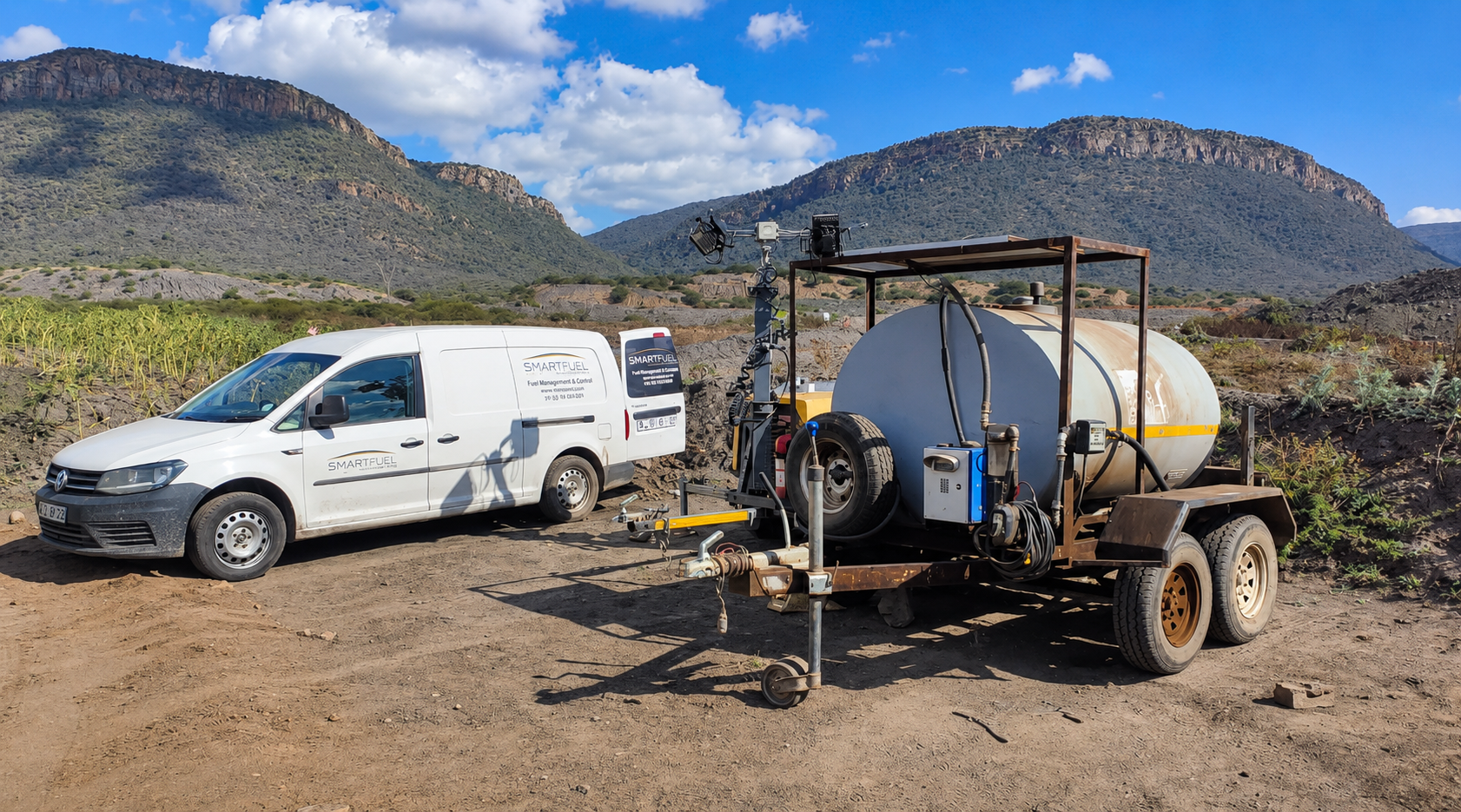
Bulk diesel storage management for a bowser is a different problem from a fixed tank. Depending on your setup, it may be towed to a farm block, moved between pits, or parked beside a contractor’s equipment. Not every bowser is mobile, vehicle-mounted or fitted with dispensing controls, so start by working out what you actually have.

Then work through these questions:
- Who is responsible for it? One named person, not “the team”.
- How is it filled? Is each fill recorded with the volume, source and date?
- How is remaining stock checked? A bowser nobody measures is a bowser nobody can reconcile.
- How are movements between sites documented? A bowser that changes location needs a record of where it went and what it held.
- How does dispensed fuel connect to a vehicle, machine or activity? A litre that cannot be tied to anything is hard to defend later.
- How are discrepancies investigated, and by whom?
On a farm, this may mean one bowser serving tractors across several blocks during harvest. On a mine or construction site, it may mean a fuel truck topping up heavy equipment in the field. The principle is the same. The fuel is moving, so the records must move with it.
How to Reconcile Bulk Diesel Stock
In bulk diesel storage management, reconciliation compares what you should have with what you actually have. The simple version is:
Expected closing stock = opening stock + deliveries – recorded fuel issued
Then compare that figure with the measured closing stock. The difference is your variance.
The result is only as reliable as the numbers feeding it. The formula assumes the opening stock was measured properly, every delivery was recorded, and every dispensing event was captured.
A variance is a prompt to investigate, not a verdict. Temperature changes, measurement tolerances, timing differences (such as a delivery logged on the wrong day) and recording gaps can all produce one. Look at the size, the pattern and the timing before drawing conclusions. For a full step-by-step method, see our fuel reconciliation guide, which walks through a worked example.
How Fuel Monitoring and Dispensing Controls Can Help
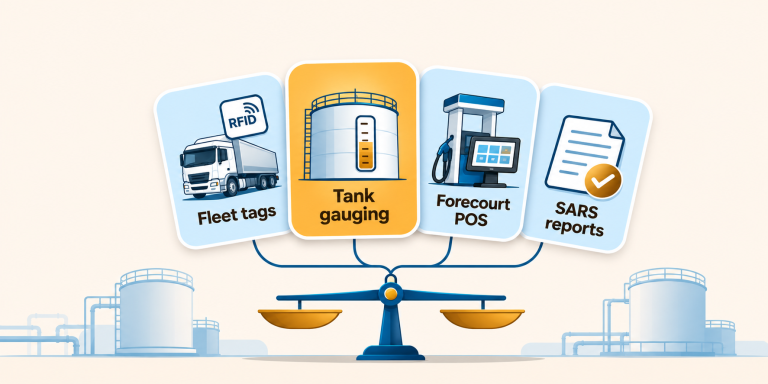
Monitoring and dispensing controls support bulk diesel storage management by addressing two different gaps. Monitoring shows what is in storage. Dispensing control shows who took fuel out, and into what.
Based on SMARTFUEL’s published information, its systems include real-time tank level monitoring, live tank readings with per-transaction reconciliation, and a tamper-proof RFID tag fitted to each vehicle. The pump stops dispensing if the nozzle is removed, and SMARTFUEL states that the system can alert managers to unusual activity. SMARTFUEL’s agricultural fuel management page also notes support for remote bowsers and mobile tanks, which matters on farms where fuel is stored far from the main yard.
These controls work best when the surrounding procedures are sound. No system makes every dispensing event attributable to a person. That requires the right equipment, a properly maintained list of authorised users and consistent use on site.
If you are comparing options, ask each supplier:
- What does the system record at a bowser, and what does it not?
- Which authorisation methods are supported, such as RFID, PIN or OTP?
- What happens at a remote site with poor connectivity?
- What alerts can be configured, and who receives them?
- Is it compatible with your existing tanks and pumps?
- How is data exported or integrated with your fleet or accounting systems?
Bulk Diesel Storage Management Across Multiple Sites
Bulk diesel storage management gets harder once fuel sits in more than one place. A farm may have a main depot plus bowsers on outlying blocks. A transport business may have several depots. A mining contractor may run tanks on different sites. The risk is that each location develops its own way of keeping records.
A few habits help:
- Give every tank and bowser a unique identifier.
- Use one recording format and one reporting process across all locations.
- Assign site-level responsibility, with one person accountable per storage point.
- Compare fuel movements across sites, not just within them.
- Set a clear escalation route for discrepancies.
When choosing a fuel-management solution, check that its reporting matches how your organisation actually works. Confirm what is supported in your specific configuration before assuming it fits.
A Practical Checklist for Bulk Diesel Storage Management
Use this bulk diesel storage management checklist and adapt it to your own operation. Inspection frequency and technical requirements depend on your site, equipment and applicable regulations, so confirm those with qualified professionals.
- Record every delivery, including volume and tank reading where possible.
- Keep a dispensing record for every litre issued.
- Check stock at a frequency that suits your risk and activity.
- Name who holds access and who keeps each record.
- Reconcile expected against measured stock and note the variance.
- Investigate unusual changes promptly, and write down what you found.
- Keep supporting documents, such as delivery notes, invoices and logbooks.
- Review fuel activity across all sites together, not only one at a time.
Agricultural Diesel Records and SARS Refunds
For farming businesses, storage and dispensing records can matter beyond day-to-day control. According to SARS, qualifying on-land primary sector claimants in farming, forestry and mining may claim a refund on 100% of eligible diesel from 1 April 2026. SARS is also moving diesel refund registration off the VAT system. A dedicated registration platform went live on 18 September 2026, and existing users must register on it, as registration is not automatic.
SARS states that records covering diesel purchases and logbook entries showing diesel used for eligible and non-eligible purposes must be kept for five years. Reliable tank and bowser records can support that traceability. They do not establish eligibility or guarantee a refund, because a claim is not an entitlement and can be verified by SARS. This is general information, not tax advice, so check the current SARS guidance or speak to a tax practitioner for your situation.
Frequently Asked Questions
What is bulk diesel storage management?
It is the combination of processes, records and equipment used to control diesel held in onsite tanks and bowsers. It covers deliveries, stock checks, dispensing control and reconciliation.
How can a business monitor diesel levels in an onsite tank?
By taking regular, recorded stock readings, or by installing a compatible electronic monitoring system that reports levels. The right option depends on the tank, the site and the connectivity available.
What is the difference between a diesel tank and a bowser?
A tank is usually a fixed storage installation, while a bowser is a tank that may be moved between locations or used to refuel equipment in the field. Arrangements differ between sites, so confirm what you have. Bowsers typically need extra records of location, custody and movement.
How can businesses reconcile bulk diesel stock?
Calculate expected closing stock as opening stock plus deliveries minus recorded fuel issued, then compare it with the measured closing stock. Investigate any variance before drawing conclusions.
How can a business control access to onsite diesel?
Define who may dispense fuel, record every dispensing event and link it to a vehicle, machine or activity. Methods such as RFID tags, PINs or OTPs can help if the equipment and set-up support them.
Can fuel monitoring help identify unexplained diesel losses?
It can make unexplained changes easier to see, for example a level drop when nothing was dispensed. It does not on its own show the cause, which could be a leak, a measurement issue, a recording gap or unauthorised dispensing.
How should businesses manage diesel across multiple sites?
Use consistent identification, a common recording and reporting process, site-level responsibility and a clear escalation route. Review movements across locations, not just per site.
Can agricultural diesel records support SARS refund claims?
Accurate storage and usage records can support the traceability SARS expects, and SARS requires such records to be kept for five years. They do not guarantee eligibility or a refund.
Conclusion
Good bulk diesel storage management comes down to four habits: reliable stock records, controlled dispensing, regular reconciliation and clear accountability. The right mix depends on your equipment, your sites and how your business operates. Software supports those habits but does not remove the need for them, and it cannot promise savings or end losses on its own.
If you want to review how your tanks and bowsers are managed today, you can speak to the team at SMARTFUEL about what fits your operation.