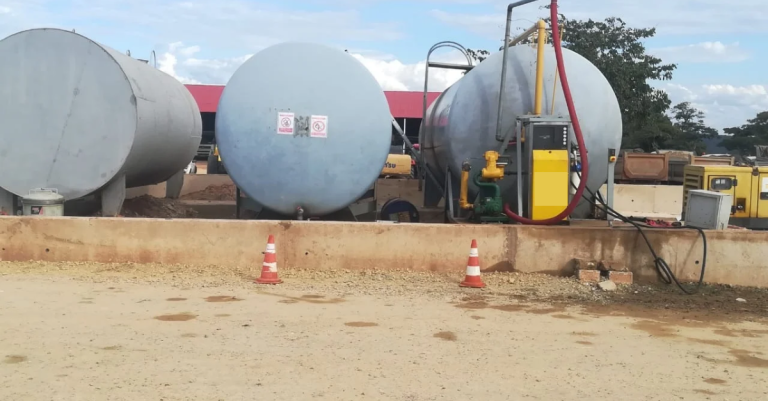
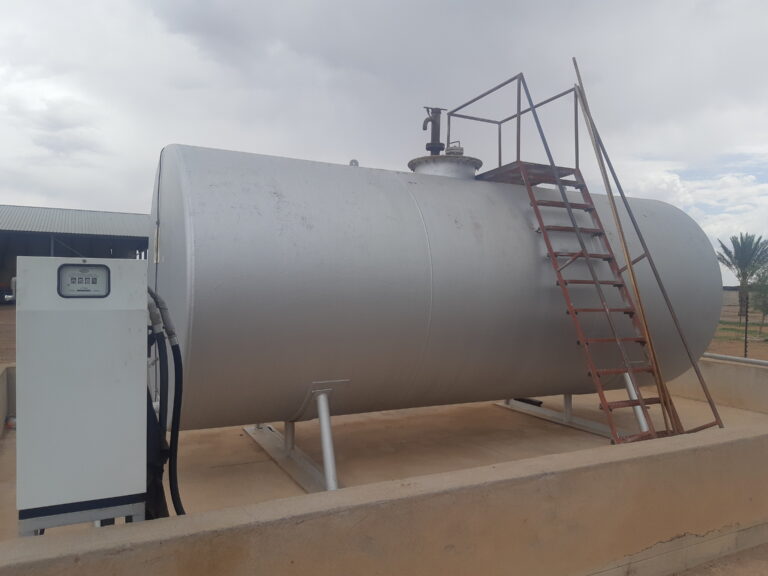
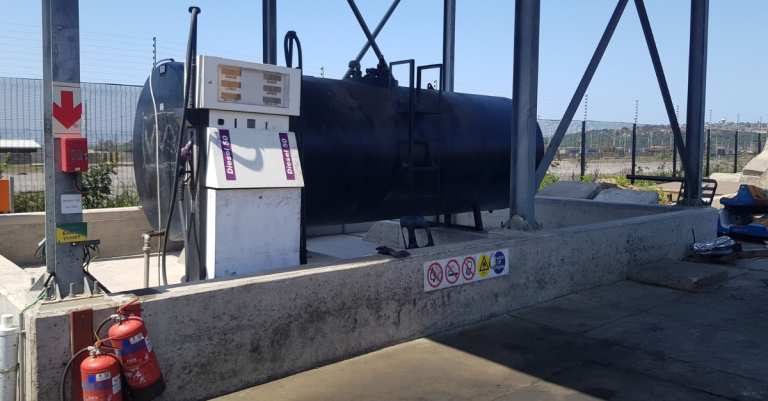
A fuel management system is a combination of hardware and software that controls who can dispense fuel, records every litre against a specific vehicle and operator, and compares those records with what is actually in your tanks. For South African mines, farms, fleets and filling stations, it replaces paper logbooks and month-end guesswork with records you can trust. Providers such as SmartFuel build fuel management systems for South African operations around exactly that principle.
This guide explains what a fuel management system does, how it works on site, which features matter, what drives the cost and how to calculate whether it pays for itself in your operation.
What Is a Fuel Management System?
A fuel management system (FMS) tracks fuel from the moment it is delivered to your tank until it is burned in an engine or sold at a pump. It does three jobs:
- Control. It decides who may take fuel, from which pump, into which vehicle or container.
- Record. It logs each transaction with the volume, date, time, vehicle, operator and, where fitted, engine hours or odometer reading.
- Reconcile. It compares what was dispensed with what the tank level says left the tank, so gaps show up as numbers instead of suspicions.
Without all three, a business is relying on trust and paperwork. With them, an unexplained shortfall becomes something you can investigate on the day it happens rather than at month end.
A fuel management system is not the same as a fuel card. A fuel card tracks purchases at third-party stations. A fuel management system governs fuel stored on your own site, in your own tanks and bowsers, and it can also manage fuel sold from a forecourt.
How a Fuel Management System Works on Site
The details differ between suppliers and between installations, but most systems follow the same chain of events.
1. Identification. The person or vehicle asking for fuel is identified. Common methods include RFID tags fitted to vehicles, driver tags, PIN codes and one-time passwords. Which methods are available depends on the system and the site.
2. Authorisation. The system checks the request against your rules. These can include whether the vehicle is registered, whether the operator is permitted to fuel, and whether a transaction limit applies. Fuel only flows if the request passes.
3. Measurement. A flow meter records the litres dispensed. At the same time, tank level sensors record the level in the storage tank. Comparing the two is what makes reconciliation possible.
4. Transmission. The data travels from the pump and tank to a central system. Wireless links reduce cabling, which matters on spread-out farms and mine depots and in areas with frequent lightning, where cabled installations are exposed.
5. Reporting and alerts. The software turns raw transactions into reports per vehicle, operator, tank and site, and sends alerts when something looks wrong, such as a tank level that drops with no matching transaction.
SmartFuel describes one version of this chain on its mining and logistics pages. A tamper-proof RFID tag is fitted in the fuel cap area of each vehicle, and the pump stops dispensing if the nozzle is removed. That is designed to stop fuel going into a private vehicle or a jerry can. Because installations are customised, always confirm which identification and control methods apply to your specific site.
Key Features of a Fuel Management System
Not every business needs every feature. The table below shows what each capability does and the problem it addresses.
| Feature | What it does | Problem it solves |
|---|---|---|
| Real-time tank level monitoring | Shows tank volumes remotely and flags sudden drops | Stockouts, undetected siphoning, leaks |
| Dispensing authorisation | Allows fuel only to approved vehicles and users | Unauthorised dispensing, fuel into private vehicles or containers |
| Vehicle and operator identification | Links each litre to a vehicle and a person | Lack of accountability across shifts |
| Per-transaction reconciliation | Compares dispensed litres with tank movement | Unexplained variances found weeks late |
| Consumption reporting | Reports litres per vehicle, hour or kilometre | Hidden inefficiency, misuse, maintenance issues |
| Multi-site visibility | Brings several tanks and depots into one view | Inconsistent controls between sites |
| Fleet system integration | Passes fuel data to fleet or telematics platforms | Double capture and disconnected data |
| Fuel quality monitoring | Tracks indicators of contamination, where offered | Engine damage and downtime from bad fuel |
| Diesel logbook records | Produces usage and storage records | Manual logbook errors and rejected claims |
SmartFuel’s published feature set also includes wireless connections, lightning-proof technology, debtors control, dry and wet stock management and attendant productivity reports for forecourts. Check the relevant industry page to see which features apply to your type of operation.
What Does Each Industry Need From a Fuel Management System?
The same basic technology is used differently depending on where the fuel goes.
Agriculture
Farms deal with remote bowsers, mobile tanks, seasonal staff and long harvest days. The priorities are usually theft prevention, clear records of which machine used how much, and complete diesel refund documentation. SmartFuel’s agricultural fuel management solution, including SmartFuel Eco, is built around tank and pump control for these conditions.
Mining
Mines run large depots, fuel trucks and heavy equipment spread over wide areas. Priorities include control at depot and bowser level, volumes and engine hours per machine, and inventory reconciliation. One South African Journal of Industrial Engineering paper on diesel rebate logbook compliance states that diesel can account for up to 46 per cent of mining operating costs, which explains why small percentage losses matter. SmartFuel’s mining fuel management system is built around depot control, vehicle tagging and automated records.
Logistics and fleets
Fleets need to know which truck took how many litres, where and when, and to reconcile that against vehicle tracking and trip data. Integration with existing platforms matters. SmartFuel’s logistics fuel management page lists integration with fleet platforms such as Key Fleet and MiX Telematics.
Forecourts and filling stations
Service stations have an added layer: fuel is sold, not just used. Priorities include wet stock control, attendant accountability, account customer limits at the pump and links between pump, shop and payment data. SmartFuel’s forecourt fuel management solutions cover these. Its Croydon Service Centre case study describes a site where about 45 per cent of sales came from debtor accounts, and how the manager used the system to move those accounts to prepaid fuel accounts. You can read the details in the Croydon Service Centre case study. Results at one site do not predict results at another.
How a Fuel Management System Helps Prevent Fuel Theft
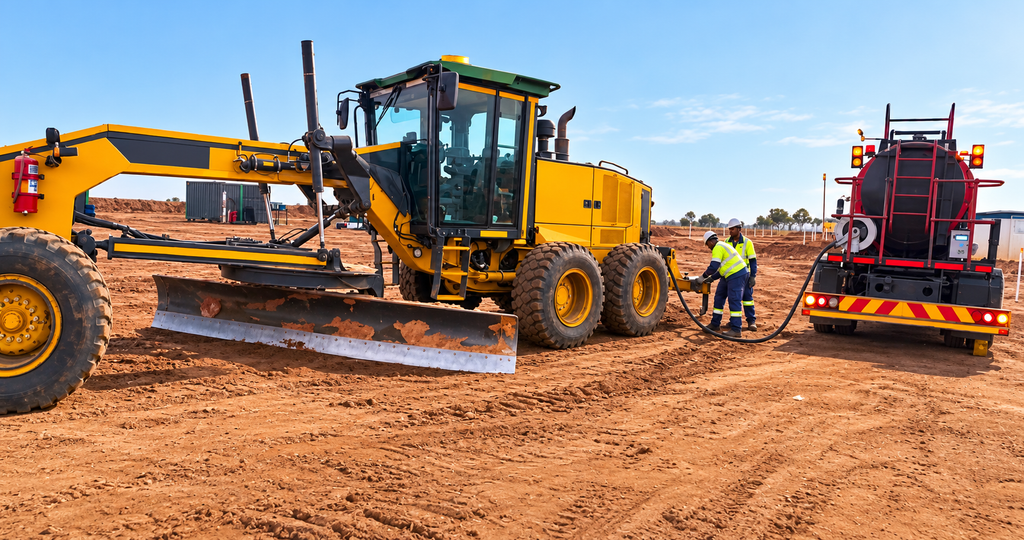
Fuel theft rarely shows up as one dramatic incident. It usually appears as small, repeated losses that get written off as heavy usage. A system helps in three ways:
- It closes the gap between “dispensed” and “removed”. If the tank drops by 400 litres but only 250 litres were dispensed through authorised transactions, 150 litres are unaccounted for, and you can see when it happened.
- It makes every transaction attributable. When each litre is linked to a vehicle and an operator, informal arrangements become harder to sustain.
- It changes behaviour. Staff who know that discrepancies are flagged tend to behave differently from staff who know no one checks.
For a closer look at the problem and the approach, see SmartFuel’s page on how fuel theft is detected and prevented. For site-level tactics, read our guide to practical ways to stop fuel theft at your forecourt or depot.
No system makes theft impossible. Tampering, collusion and delivery fraud still need sound procedures around the technology, such as supervised deliveries and regular meter checks.
Fuel Management Systems and the SARS Diesel Refund
For primary producers, record keeping is one of the strongest practical reasons to install a system. The key facts from the South African Revenue Service Diesel Refund Scheme page are:
- The Diesel Refund Scheme refunds all or part of the general fuel levy and the Road Accident Fund levy for qualifying activities in certain sectors, under the Customs and Excise Act and Schedule 6.
- From 1 April 2026, on-land primary sector claimants can claim a refund on 100 per cent of eligible diesel used in qualifying farming, forestry and mining activities.
- Diesel refund registration is being separated from VAT registration. A new registration platform on eFiling went live on 18 September 2026, and existing users must register on it because registration is not automatic.
- Claimants must retain diesel purchase documents and logbook entries showing eligible and non-eligible use for five years.
- A claim is not an automatic entitlement. It can be verified, and amounts refunded incorrectly must be repaid with applicable penalties and interest.
A system that records every litre against a vehicle and activity, and keeps tank-level storage data, produces the underlying records that logbooks depend on. It does not decide what qualifies. Eligibility depends on your specific activities, so confirm with SARS or a tax practitioner before relying on any system for a claim.
What Does a Fuel Management System Cost?
There is no honest single price, because cost depends on the scope of the installation. SmartFuel states that pricing is customised to each operation. The main cost drivers are:
| Cost driver | Why it changes the price |
|---|---|
| Number of tanks and dispensing points | Each point needs metering and control |
| Number of vehicles to tag | Each vehicle or machine needs identification |
| Number of sites | Multi-site operations need more hardware and central reporting |
| Tank sensing | Level sensing and reconciliation add hardware |
| Wired or wireless installation | Distance and terrain affect installation effort |
| Integrations | Links to fleet, accounting, POS or telematics systems add setup work |
| Forecourt functions | POS, shop stock and account customer control add scope |
| Training and support | Onboarding and ongoing support vary by supplier |
When comparing quotes, ask whether pricing covers hardware, installation, software access, training and support, and which of these recur.
How to Calculate Fuel Management System ROI
Return on investment depends on how much fuel is currently lost, wasted or poorly recorded in your operation. Supplier averages are a poor guide to your own numbers, so build the calculation from your data.

Step 1: Estimate current losses. Compare litres purchased with litres you can account for over a few months. The difference is your starting point. Our guide to fuel reconciliation shows how to work this out.
Step 2: Value the litres. Multiply by your actual purchase price.
Step 3: Add the soft costs. Include admin time spent on manual logs and reconciliation, and refund claim problems caused by weak records.
Step 4: Compare with total system cost over the period you are evaluating.
Illustrative example only. This is not a result from any SmartFuel client. Assume a depot dispenses 100,000 litres a month and 1 per cent cannot be accounted for. That is 1,000 litres a month. At an assumed R20 per litre, which is a placeholder and not a current price, that is R20,000 a month or R240,000 a year. If the installed system cost R300,000, and it recovered the entire 1 per cent, simple payback would be 15 months. If your loss is 2 per cent, payback halves. If your loss is lower, payback is longer. Replace every assumption with your own numbers.
SmartFuel publishes figures such as fuel cost reductions of 10 to 20 per cent and theft incident reductions of up to 90 per cent on its industry pages. These are the company’s own statements, results vary from site to site, and they should be tested against your own data before they go into a business case.
How to Choose a Fuel Management System: Questions to Ask Suppliers
- Which identification methods does the system support at my site, and which are fitted by default?
- How are pumps controlled if the network or power goes down?
- How is tank volume measured, and how often is it reconciled against dispensing?
- How does the system perform in lightning-prone or remote areas?
- Can it integrate with the fleet, accounting or POS platforms I already use?
- What reports are included, and can I see a real sample?
- What records does it produce for diesel refund logbooks, and what remains my responsibility?
- Who installs, trains and supports my team, and what are the response times?
- What is included in the quoted price, and what recurs?
- Can I speak to or visit a similar site that already uses it?
Common Mistakes When Introducing a Fuel Management System
- Treating it as a technology project only. Procedures for deliveries, tag issue, lost tags and exception handling decide whether the data is acted on.
- Skipping the baseline. Without a record of losses before installation, you cannot measure what changed.
- Not tagging everything. Untagged vehicles and containers become the workaround.
- Ignoring the reports. A system that produces exception alerts nobody reads protects nothing.
- Assuming the system decides eligibility. Diesel refund qualification is determined by the legislation and your activities, not by software.
Key Takeaways
- A fuel management system controls, records and reconciles fuel so that losses become visible.
- Value comes from linking dispensing records to tank levels, vehicles and operators together, not from any single feature.
- Needs differ between mines, farms, fleets and forecourts, so choose by industry and site.
- Primary producers gain better records for diesel refund logbooks, but eligibility still depends on SARS rules.
- Cost depends on scope, and ROI should be calculated from your own loss data.
- Treat published savings figures as claims to test, not guarantees.
Frequently Asked Questions
What is a fuel management system?
A fuel management system is hardware and software that controls access to fuel, records every transaction against a vehicle and operator, and reconciles dispensed litres with tank levels. It is used on mines, farms, fleets and forecourts to reduce losses, improve accountability and produce accurate fuel records for reporting.
How does a fuel management system prevent fuel theft?
It limits dispensing to authorised vehicles and users, links each litre to a transaction and compares dispensed volumes with tank level changes. When the numbers do not match, the system flags the gap. It reduces theft risk but works best alongside proper delivery supervision and clear procedures for exceptions.
How much does a fuel management system cost in South Africa?
The price depends on the number of tanks, dispensing points, vehicles and sites, plus integrations and support. Suppliers, including SmartFuel, customise quotes per operation. Ask for a breakdown covering hardware, installation, software, training and recurring charges so you can compare quotes on the same basis.
How long does it take for a fuel management system to pay for itself?
Payback depends on your current losses, fuel volumes and system cost. Estimate unaccounted litres over several months, multiply by your purchase price and compare that with the total cost. Higher-volume operations with measurable losses usually see shorter payback than low-volume sites with good controls already in place.
Can a fuel management system help with SARS diesel refund claims?
It can help by keeping accurate records of diesel purchased, stored and used, which refund logbooks rely on. SARS requires records to be kept for five years, and claims can be verified. The system does not determine eligibility, so confirm qualifying activities with SARS or a tax practitioner.
What is the difference between a fuel management system and a fuel card?
A fuel card tracks purchases made at third-party filling stations. A fuel management system controls and records fuel stored on your own premises in tanks and bowsers, and it can also run fuel sales at a forecourt. Some businesses use both for different parts of their fuel supply.
Do I need a fuel management system for a small farm or a single filling station?
Not necessarily, but size is less important than loss exposure. A small operation with high diesel use, remote tanks or several operators can still lose meaningful volumes. Suppliers such as SmartFuel state their solutions can be customised for different business sizes, so a quote shows what fits your scale.
Conclusion: Start With Your Own Fuel Numbers
The best starting point is not a product comparison. It is a clear picture of how many litres you buy, how many you can account for and where the gap sits. Once you have that, a fuel management system becomes a business decision you can price and test, not a leap of faith.
If you want to see how a system could fit your mine, farm, fleet or service station, you can explore SmartFuel’s fuel management solutions and then contact SmartFuel to discuss your requirements. SmartFuel’s enquiry forms offer options ranging from an overview email to a 10-minute discovery call, a 30-minute strategic call or a 60-minute onsite needs analysis.