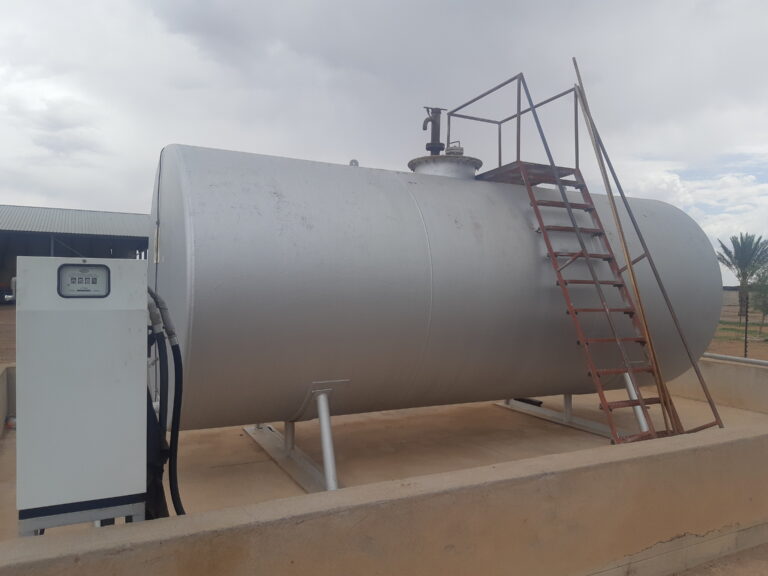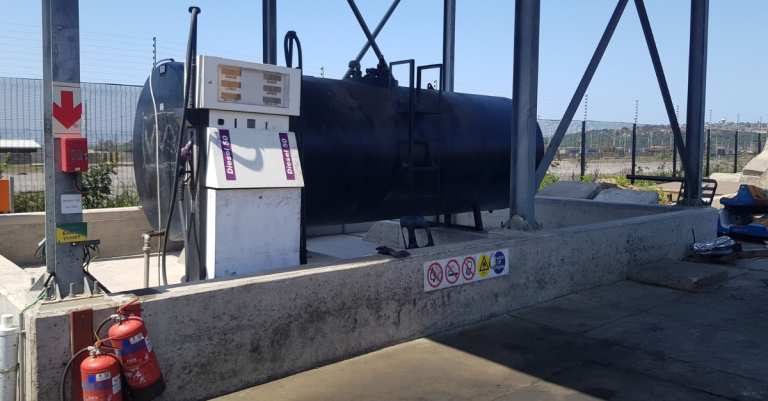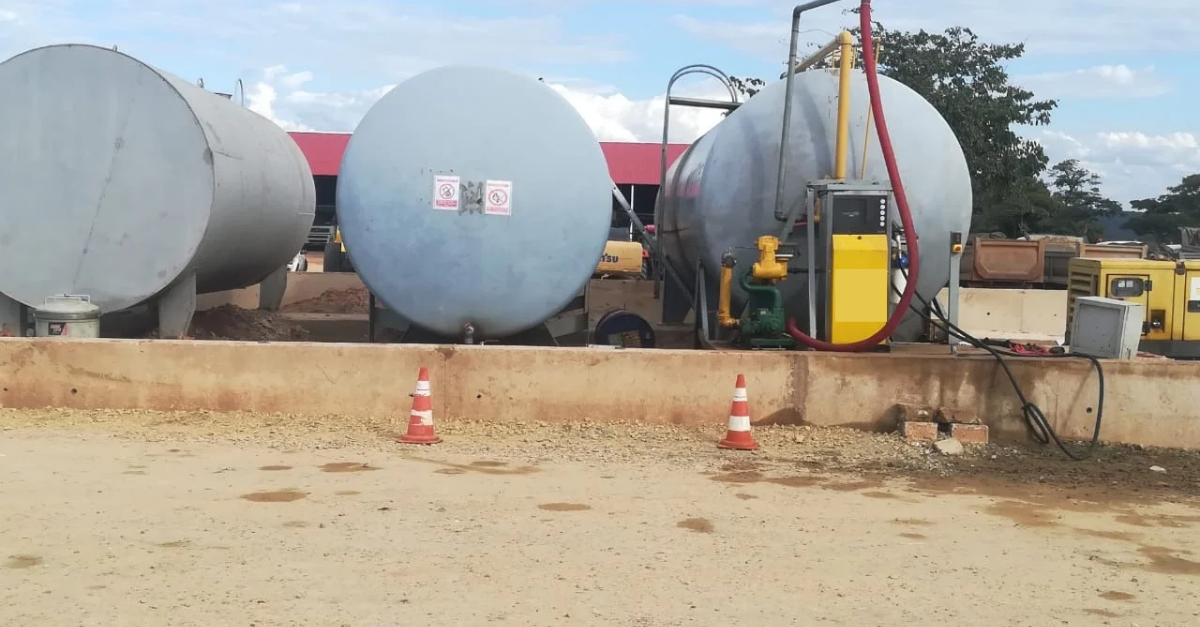
A car fuel management system and fleet fuel management are not the same thing. The first usually looks at one vehicle’s consumption or fuel purchases, while fleet fuel management covers how fuel is bought, stored, dispensed and accounted for across vehicles, drivers, depots and tanks. If your business keeps its own diesel on site, you probably need the second, and SmartFuel builds fuel management systems for South African businesses for exactly that situation.
The question usually starts with a diesel bill that keeps climbing while nobody can say why. Before you buy anything, it helps to know which problem you are actually solving.
What Is a Car Fuel Management System?
Search for “car fuel management system” and you will find several different things sharing one name. None of them is wrong, but they do different jobs.
An engine fuel-management system. This sits inside the vehicle. The engine control unit decides how much fuel to inject and when, using sensor inputs such as engine speed, air intake and temperature. It manages combustion and emissions. It does not record who filled the tank or how many litres went in.
A vehicle fuel consumption record. This is a business tool, whether a spreadsheet, an app or a software module, that logs litres, distance and cost per vehicle. It tells you how a vehicle is performing. It does not control who gets fuel.
A fuel card or transaction arrangement. A fuel card records purchases made at third-party filling stations. It gives you a statement and some spending controls. It does not manage fuel stored in your own tanks.
A fuel dispensing control system. This governs fuel stored on your premises. It decides who may fill from which pump, records each transaction and compares what was dispensed with what left the tank.
Each of these may be exactly what one business needs and useless to another. A single product rarely does all four, so check what you are actually being offered.
What Is Fleet Fuel Management?
Fleet fuel management is the set of processes and tools a business uses to record, control, monitor and reconcile fuel across its vehicles, drivers, depots and tanks. Which tools sit inside it depends on how the business gets fuel.
A company fuelling only at public stations may rely on fuel cards and consumption reporting. A company with a depot tank needs control over dispensing, tank levels and stock reconciliation. A larger operation often combines several tools.
Three things matter in every case: accountability (who took the fuel), reliable records (what was actually dispensed) and useful reporting (whether managers can see it in time to act). Not every provider offers GPS tracking, vehicle diagnostics, fuel cards, tank monitoring and dispensing control in one package. Ask which parts a provider actually delivers and which depend on someone else’s system.
Car Fuel Management System vs Fleet Fuel Management
This table compares the categories in general terms. It is not a product specification, and individual products vary.
| Question | Car or vehicle-level fuel tracking | Fleet fuel management |
|---|---|---|
| Main purpose | Understand fuel use or spend for individual vehicles | Control and account for fuel across vehicles, drivers, tanks and sites |
| Typical users | Owners of a few company cars, finance staff reviewing fuel claims | Fleet managers, depot supervisors, mine and farm managers, operations heads |
| Scope of monitoring | One vehicle or one card at a time | The whole fuel chain, from delivery to tank to vehicle |
| Vehicle fuel consumption | Core function, usually from fill-ups and distance | Available where the system links fills to vehicles and hours or distance |
| Fuel purchases and transactions | Recorded from receipts, cards or entries | Recorded at the pump or card, depending on the solution |
| Bulk diesel storage and dispensing | Generally not covered | Covered by dispensing-control and tank-monitoring solutions |
| Access controls | Limited, often card limits | Authorisation by vehicle, driver or tag, where the system supports it |
| Reporting | Per vehicle or per statement | Per vehicle, driver, tank and site, plus reconciliation |
| Multi-site operations | Rarely designed for it | Often a core requirement |
| Questions to ask a provider | What does it record, and from which source? | What does it control, record and reconcile, and what does it integrate with? |
Most businesses do not choose between the two. A company might use fuel cards for vehicles on the road, a dispensing-control system at the depot tank and a telematics platform for trip data. The job is to work out which pieces you are missing.
Signs Your Business Has Outgrown Manual Fuel Tracking
Spreadsheets and paper registers work when there are a few vehicles and one person handling fuel. These signs suggest the process has stopped scaling:
- Receipts, driver notes and depot records live in different places and rarely agree.
- Someone spends days each month reconciling fuel transactions.
- When a discrepancy appears, nobody can trace it to a shift, vehicle or pump.
- Different depots record fuel in different ways.
- The business has added vehicles, tanks or sites faster than the fuel process has developed.
- Management only sees fuel reports weeks after the month ends.
- There is no clear rule for who authorises dispensing or who reviews exceptions.
Seeing these signs means you should review your process and requirements. It does not mean you should buy the most expensive technology.
Which Fuel Management Approach Is Right for Your Business?

Businesses with a small number of company cars
If your drivers fuel at public stations, you may not need bulk dispensing control. Reliable transaction records, whether from fuel cards or consistent receipts, plus a simple view of litres against distance, may be enough. A rising fuel bill is not automatically theft. It can come from mileage, route changes, fuel price movements or vehicle condition. Start by finding out which.
Transport and logistics companies
Fleets with a depot need fleet-level visibility and accountability at the pump. SmartFuel’s logistics fuel management page describes a system that fits an RFID tag to each vehicle, so fuel is dispensed only to a recognised vehicle. It also covers live tank readings reconciled against each transaction, and integration with fleet platforms such as Key Fleet and MiX Telematics. If your trucks refuel from your own tank, that is the section to read closely.
Mining operations
Mines run depots, fuel trucks and heavy equipment across wide sites. The priorities are control at depot and bowser level, volumes per machine and clear reconciliation. SmartFuel’s mining fuel management page covers depot and fuel truck control, automatic recording of volumes and engine hours per vehicle, and inventory reconciliation reports.
Agricultural businesses
Farms combine remote tanks, seasonal staff and machinery that works long hours. Practical needs include knowing which machine used what and keeping records for the diesel refund. From 1 April 2026, SARS allows on-land farming, forestry and mining claimants to claim a refund on 100% of eligible diesel, and claimants must keep purchase documents and logbook entries for five years. A claim is not an automatic entitlement and can be verified, as the SARS Diesel Refund Scheme page explains. SmartFuel’s agricultural fuel management page explains how its system supports those records.
Businesses operating their own fuel tanks or depots
Whatever your industry, a private tank changes the problem. You now need to know what was delivered, what was dispensed, who authorised it and what remains. Delivery checks, tank-level monitoring, authorised-user control and daily reconciliation all matter here. Systems differ in how much of this they cover, so do not assume two quotes include the same things.
Features to Evaluate Before Choosing a Fleet Fuel Management Provider

For each feature, the useful question is what problem it solves and how the provider proves it.
- Reliable transaction records. Every fill should be logged automatically with date, time, volume and vehicle. Ask whether records can be edited, and by whom.
- Dispensing authorisation. If you hold your own diesel, ask how the system decides who may fuel. SmartFuel’s service pages describe a tamper-proof RFID tag on each vehicle and a pump that stops if the nozzle is removed.
- Tank monitoring. A level that drops with no matching transaction is one of the clearest warning signs. Ask how often levels are read and who sees the alerts.
- User or driver identification. Ask exactly which methods are supported at your site. SmartFuel’s pages confirm RFID tags, and options such as PINs depend on the installation.
- Fuel reconciliation reports. You want dispensed litres compared with tank movement, ideally daily. Our guide to how fuel reconciliation works explains the formula.
- Visibility across locations. Ask whether several tanks and depots appear in one view or in separate reports.
- Compatibility. Check what the system connects to. SmartFuel’s logistics page names Key Fleet and MiX Telematics. Confirm your own platform in writing before you assume it works.
- Support and maintenance. Ask who installs, who services and what the response times are.
- Training and implementation. A system nobody uses properly protects nothing. Ask what training is included.
- Scalability. Ask what happens when you add a depot or fifty vehicles.
How to Reduce Fuel Costs Without Choosing the Wrong System
Before you request quotes, spend a week on your own process:
- Write down how fuel moves through the business, from supplier to tank to vehicle.
- Compare litres bought with litres you can account for over a few months.
- List the recurring discrepancies and where they appear.
- Decide what information management actually needs and how quickly.
Then compare proposals on scope, implementation and ongoing costs, not only the upfront price.
Technology supports control, but it does not replace procedure. Someone still has to review exceptions, issue and retire tags, and supervise deliveries. No provider can honestly promise a fixed reduction in your fuel bill. Actual costs depend on vehicle type, distance, workload, driving conditions, fuel prices and how well your processes are followed.
Common Mistakes When Choosing a Fuel Management System
- Confusing engine management with business fuel control. They solve different problems.
- Buying technology that misses the real problem. A consumption app will not stop dispensing from an unguarded tank.
- Assuming a fuel card or a vehicle tracker covers everything. Cards cover third-party purchases. Trackers cover location and driving. Neither controls your own pump.
- Choosing on upfront price alone. Installation, training, support and recurring fees all count.
- Ignoring bulk storage and dispensing. If you hold diesel, it is probably where most of the exposure sits.
- Assuming all providers report the same way. Ask for a sample report.
- Skipping compatibility checks. Confirm connectivity and integrations before signing.
- Expecting software to prevent all theft. Tampering and collusion still need procedures around the technology. Our guide to practical ways to stop fuel theft at a forecourt or depot covers the controls that sit alongside any system.
How to Choose the Right Solution for Your Operation
Document these points before you ask anyone for a proposal:
- How fuel is purchased: fuel cards, cash, accounts or bulk delivery.
- Whether you store your own diesel.
- Where your vehicles refuel.
- How each fuel transaction is recorded today.
- Whether dispensing needs authorisation, and from whom.
- How many vehicles, tanks, sites and dispensing points are involved.
- Which reports managers need, and how often.
- Whether existing systems must connect to the new one.
- What installation, training and support you will need.
- How the operation is likely to grow.
With that written down, you can compare providers on equal terms and spot gaps in their proposals.
Frequently Asked Questions
What is the difference between a car fuel management system and fleet fuel management?
A car fuel management system usually tracks fuel use or spend for individual vehicles. Fleet fuel management covers how fuel is bought, stored, dispensed and reconciled across vehicles, drivers, tanks and sites. The right choice depends on whether your fuel comes from public stations, your own tanks or both.
Is a vehicle fuel management system the same as an engine fuel management system?
No. An engine fuel-management system is part of the vehicle, where the engine control unit manages injection and combustion. A vehicle fuel management system in a business context records or controls fuel purchased or dispensed. One governs the engine, the other governs your fuel records and access.
What does a fleet fuel management system do?
It helps a business record, control and reconcile its fuel. Depending on the solution, that can include authorising who fuels, logging each transaction against a vehicle, monitoring tank levels and reporting by vehicle, driver or site. Features vary by provider, so confirm exactly what is included.
Does fleet fuel management help identify fuel discrepancies?
It can. When each transaction is recorded and compared with tank levels, differences show up as numbers you can investigate. A discrepancy is not proof of theft, because meter error, temperature changes and recording mistakes also cause variances. The system shows you where to look.
Does a business need fuel cards and a fuel management system?
Possibly both. Fuel cards record purchases at third-party filling stations, while a fuel management system controls fuel stored on your own premises. A business that fuels vehicles at public stations and from its own depot tank may use each for a different part of its fuel supply.
Can a fuel management system monitor bulk diesel tanks?
Many can, but it depends on the product. Tank monitoring reads the level in your storage tank so you can compare it with dispensing records. SmartFuel’s service pages describe live tank readings reconciled against each transaction. Ask any provider how often levels are read and who receives alerts.
What should a small business consider before investing in fuel management?
Start with how you buy and store fuel. If your vehicles refuel at public stations, consumption records or fuel cards may be enough. If you hold diesel on site, dispensing control and reconciliation matter more. Measure your current losses first, then compare quotes on scope and total cost.
Which fuel management system is suitable for a logistics company in South Africa?
It depends on how your trucks refuel. A company with a depot tank needs dispensing control, tank monitoring and reconciliation. One that fuels on the road may focus on cards and consumption reporting. Check compatibility with any fleet or telematics platform you already use before choosing.
Can a fleet fuel management system manage several depots?
Some can, by bringing several tanks and sites into one central view. Others report each site separately. Ask providers whether multi-site reporting is included, how new sites are added and how consistent controls are kept across locations.
Choose a System That Fits the Way Your Business Uses Fuel
Vehicle-focused fuel tracking tells you how individual vehicles behave. Fleet or site-level fuel management tells you where every litre went, from delivery to tank to vehicle. Which one you need depends on your actual fuel process, the reports management relies on, the controls you want in place and the environment you operate in.
If you hold your own diesel, it is worth seeing how SmartFuel’s fuel management solutions work on a real site. You can also contact SmartFuel to talk through your fuel process and requirements.