An automated fuel management system takes people out of the steps where fuel records go wrong: authorising fills, capturing litres, dipping tanks and reconciling the books. This guide shows where manual handling lets error and pilferage in, what automation replaces and what it cannot fix.
It comes from SmartFuel, a South African fuel management company, so treat vendor claims, ours included, with care. We reviewed trade, industry and vendor sources and name each one. Several sell automation, so we leave out their savings figures. Chart numbers are illustrative, and we have not tested any product.
Key takeaways
- Manual fuel control has six weak points: authorising, capturing litres, recording odometers, measuring tanks, logging deliveries and reconciling.
- An automated fuel management system replaces typed or written entries with captured data, and replaces reading every record with reading the exceptions.
- It makes theft visible. It does not stop collusion, tampering or bad setup data.
- Alerts only help if a named person responds.
- Start where the loss exposure is highest and the effort is lowest, usually dispensing control and tank monitoring.
How does an automated fuel management system remove human error?
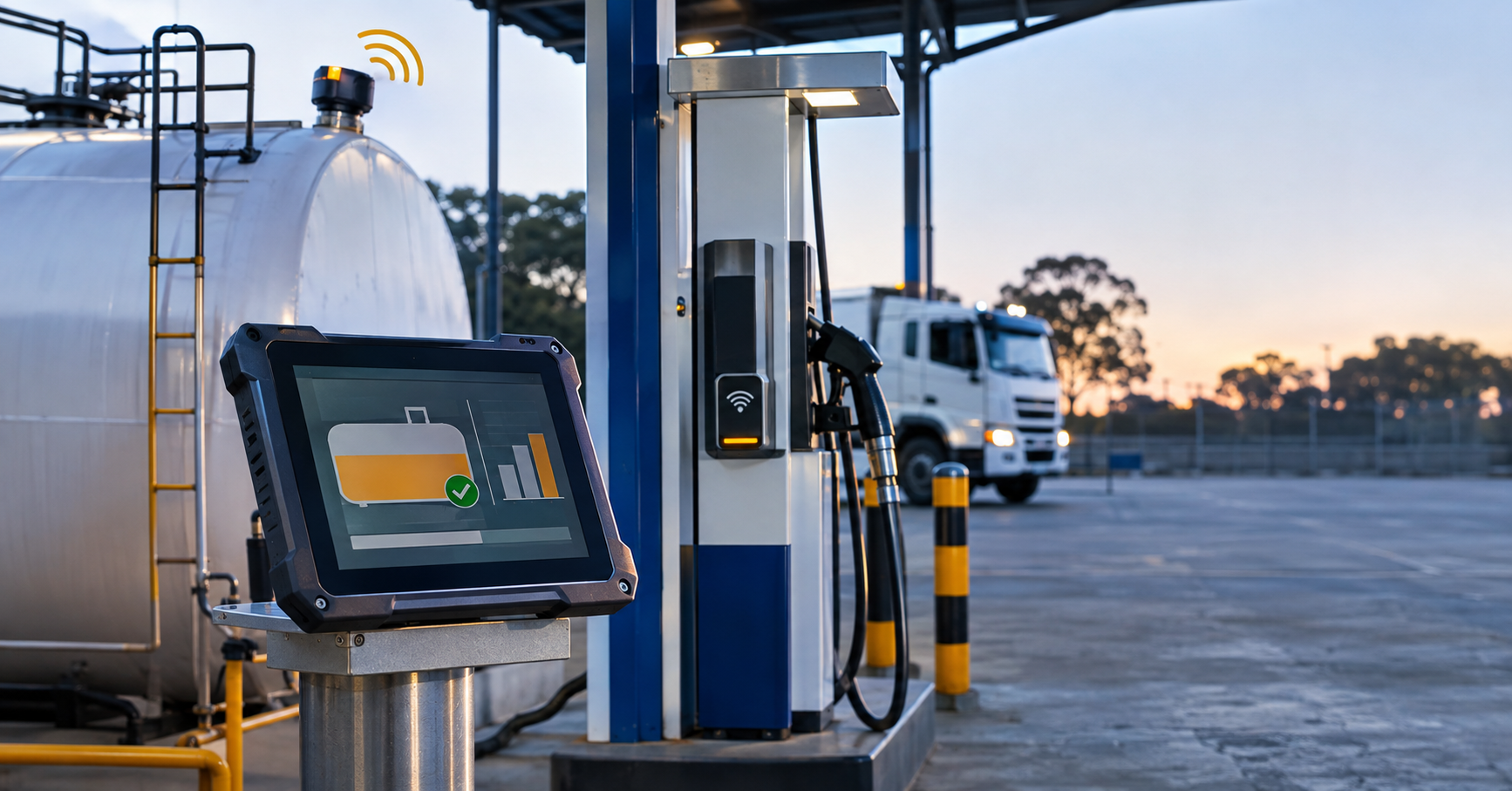
An automated fuel management system removes human error by capturing the data itself. It identifies the vehicle, records the litres from the pump, reads the tank with a probe and compares the totals, so nobody retypes or misreads a number. People then review only the exceptions the system flags.
Chart 1: How many hands touch one fill?
Our simplified count of places a person can make, or hide, a mistake in one fill-and-reconcile cycle. Illustrative, not measured. Automated review dots are the person who acts on alerts.
Where do manual fuel records go wrong?
Infrastructure News reported that a Microsoft Excel spreadsheet is the most common fuel management system in South Africa, sometimes even where a sophisticated system has been installed. It adds that measuring consumption manually often loses accuracy to human error. The weak points sit in a predictable order.
Authorising the fill
Gilbarco says that without automatic vehicle identification there is no guarantee fuel goes into the right vehicle or asset. A Washington State auditor guide warns that drivers share fuel cards or PINs, enter inaccurate odometer readings and fill several vehicles or cans in one transaction.
Capturing litres and odometers
A Missouri fleet guide lists a driver entering the wrong odometer at the pump as a common problem. Every handwritten slip also has to be retyped later, which adds a second chance to slip.
Measuring the tank
Gilbarco says human error can occur anywhere in the manual dipping and reconciliation process. Dover Fueling Solutions names misreading a dip stick or recording a reading incorrectly. Both vendors sell tank gauging, so read the point as theirs, though the mechanism is plain.
Joining the data together
The Avis Fleet Services team told Mining Weekly that the weakness in card monitoring reports is tracking consumption when a fleet has more than one source of fuel data. Bulk tank, card and slip records rarely line up on their own.
Where theft fits in
A Fueltec director, whose company sells tank gauging, argued that wherever a human is involved there is room for error and sometimes theft. Our fuel theft prevention page covers the theft routes, and our fuel reconciliation explained page covers the bookkeeping.
Chart 2: How long does a loss sit unseen?
Illustrative. The alert bar assumes a level or after-hours rule is switched on and someone responds. The manual bar is the longest a loss can wait for the next reconciliation.
What does an automated fuel management system do differently?
Each manual step has a counterpart in an automated fuel management system, though hardware and software vary by supplier, so confirm each item before you buy.
- Identify the vehicle automatically. Minetec describes a mining system with vehicle recognition, stock level warnings and consumption reporting, rolled out across Menar’s mining machines.
- Capture litres at the pump. An AFS spokesperson said cutting out human intervention in authorising transactions and capturing data can help prevent fuel fraud.
- Read tanks with a probe. Gilbarco says computerised systems use installed probes and automated tank gauges. In the UK, HMRC guidance expects equipment installed after October 2006 to agree with manual dipping within plus or minus 5 mm.
- Record deliveries as they happen. Gilbarco says real-time wetstock monitoring captures delivery events as they occur.
- Validate before month end. Autosist lists tank capacity checks, GPS matching and fuel type controls as rules that catch bad data early.
- Alert on exceptions. Fleet Maintenance notes that some systems send automatic alerts for transactions outside set limits, such as after hours or above a fill amount.
Chart 3 shows how rules sort clean fills from odd ones. Our mining fuel management and logistics fuel management pages show how the data differs by sector.
Chart 3: Which fills would your rules flag?
| Time | Tag | Litres | Tank | Flag |
|---|
Eight made-up fills. A flag is a prompt to check, not proof of theft.
How much admin does automation remove?
Less than the headline suggests, and more than most managers expect. An automated fuel management system does not abolish review. It changes what you review. Government Fleet defines an exception report as one that shows only data outside the norm, so a person reads dozens of lines, not hundreds. Oxmaint, a vendor, says manual card reconciliation for a 50-vehicle fleet takes 2 to 3 days a month and still misses fraud patterns. Use Chart 4 with your own timings.
Chart 4: What does paperwork cost in hours?
Placeholder inputs, not benchmarks. A vendor, Oxmaint, says manual card reconciliation takes 2 to 3 days a month for 50 vehicles. Time your own process.
Manual versus automated fuel control, step by step
The right-hand column matters most, because automation moves risk and does not erase it. Our fuel management system provider guide covers how providers differ.
| Step | Manual way | Automated way | Still can go wrong |
|---|---|---|---|
| Authorise a fill | Storeman or driver asks, slip signed | Tag or ID read at the pump | Shared tags, stolen tags |
| Record litres | Read the pump, write a slip | Meter pulses logged | Uncalibrated meter |
| Record odometer | Driver writes it | Telematics link or keyed entry | Keyed entry can still be wrong |
| Measure the tank | Dip stick and chart | Probe, logged automatically | Wrong tank chart, faulty probe |
| Log a delivery | Docket plus dip before and after | Delivery event captured | Docket still needs checking |
| Reconcile | Retype into a spreadsheet | System compares receipts, issues, stock | Garbage in, garbage out |
| Spot problems | Someone reads every line | Rules flag exceptions | Nobody reads the flags |
| Integrated system (SmartFuel, to confirm per site) | Real-time wireless level monitoring, theft prevention and chain of custody tracking; confirm the hardware, alert routing and reports with smartfuel | Confirm per site | |
When is an automated fuel management system not enough on its own?
- Nobody reads the flags. Mansfield Energy says recurring exceptions can point to theft risk, training needs, wrong vehicle assignments or weak internal controls. That only helps if someone follows them up.
- A flag is not proof. Autosist cautions that after-hours fuelling does not always mean fraud, and that three in a month deserves a review of driver, route, vehicle and schedule.
- Shared logins and collusion. Government Fleet advises against shared logins, so every entry carries a user ID.
- Bad setup data. Wrong tank sizes or tank charts make good rules produce bad flags.
- The assumption that it solves everything. Infrastructure News lists assuming a system will stop theft entirely as a mistake.
If you run one small tank and one trusted operator, a disciplined weekly dip may be enough for now. Revisit it when volumes or sites grow.
Checklist: moving from manual to automated fuel control
- List every step where a person writes, types or reads a fuel number.
- Fix the basics first: lock tanks, prove meters and correct tank charts.
- Identify every vehicle and operator automatically, and end shared PINs.
- Add probe-based tank monitoring with alerts for sudden drops and after-hours use.
- Capture every delivery and compare it with the docket.
- Write exception rules, and name who responds and by when.
- Run the old and new records in parallel for a month and compare.
- Review recurring exceptions monthly and adjust the rules.
Not every step needs doing at once. Chart 5 ranks them by our judgement of effort and exposure.
Chart 5: Where should you automate first?
Key: 1 Authorised dispensing, 2 Tank level monitoring, 3 Delivery capture, 4 Exception alerts, 5 Automated reconciliation, 6 Odometer and telematics link.
Positions are our judgement, not measured results. Your site may rank them differently.
Automated fuel management systems: frequently asked questions
What is an automated fuel management system?
It is hardware and software that identify the vehicle, record litres at the pump, read tank levels with probes and compare the totals without manual entry. The system builds an audit trail and flags exceptions, such as after-hours fills, for a person to review. Features vary by supplier, so confirm them before you buy.
Does an automated fuel management system stop fuel theft?
No. It makes theft and error visible sooner by capturing records a person cannot quietly change. Infrastructure News lists assuming a system will stop theft entirely as a mistake. Collusion, tampering and nobody acting on alerts can still let fuel leak, so pair the system with locks, access control and review.
How accurate are automatic tank gauges compared with dipping?
It depends on calibration, the tank chart and installation. UK HMRC guidance expects automatic level gauges installed after October 2006 to agree with manual dipping within plus or minus 5 mm. That is a UK rule, not a South African standard, so ask your supplier for the stated accuracy of the probe you are quoted.
Which manual errors does an automated fuel management system remove?
It removes misread dip sticks, wrongly written litres, retyped spreadsheet entries, shared PINs and unidentified vehicles, because the data is captured at source. It does not remove a wrong tank chart or a faulty sensor. Gilbarco, Dover Fueling Solutions and Infrastructure News all name manual capture as a source of error.
Can staff still cheat an automated fuel management system?
Yes, through collusion, shared tags, tampering or ignoring alerts. Audit trails with a user ID on every entry make this harder to hide, and exception reports show patterns across drivers, vehicles and times. Treat a flag as a prompt to check several records, not as proof.
Is an automated fuel management system worth it for a small site?
There is no fixed threshold. Infrastructure News offers an illustration: if a system costs R10 000 a month and fuel costs R10 a litre, it needs to save 1 000 litres to pay for itself. Use your own price, losses and quotes. A single small tank with a trusted operator may manage with disciplined dipping.
See where your fuel records leak
To compare providers and what each one automates, read our fuel management system provider guide. SmartFuel is a South African fuel management company with 26 years of experience, trusted at 600+ sites and based in Johannesburg.
Want a view of your own site? Contact the SmartFuel team or call +27 11 615 3437.
Sources
- Infrastructure News: When fuel goes missing
- Gilbarco: Why manual fuelling workflows cost more
- Gilbarco: The importance of wetstock inventory automation
- Gilbarco: Fuel delivery monitoring checklist
- Dover Fueling Solutions: Smarter wetstock management
- Hectronic: Implementing automated fuel management
- The Herald: New tech to cut fuel pilferage
- Bizcommunity: AFS eFuel
- Mining Weekly: Demand high for automated fuel system
- Mining Weekly: Fleet manager fights fuel fraud
- Washington State Auditor: Fuelling government vehicles (PDF)
- State of Missouri: Fuel and odometer data entry guide (PDF)
- HMRC: Automatic tank level gauges
- Autosist: When fuel data looks wrong
- Autosist: Fleet fuel exceptions
- Fleet Maintenance: Is your fuel going missing?
- Government Fleet: Gathering reliable data
- Mansfield Energy: Exception reporting
- Oxmaint: Fuel card reconciliation checklist